
In this fourth article (4/5) we go to an often underestimated blockade: layout and routing. Not as a ‘drawing on the floor‘, but as a system design that determines how much movement, waiting time, stock and risk your organization structurally builds in.
Operational Excellence (OpExc) requires end–to–end control of the system: delivering value, making performance predictable and improving based on facts. In article 1/5 we laid the foundation (no coincidence, no hero work). In article 2/5, we defined OpExc as a capability. In article 3/5, we added benchmarking as a management principle.
1. How it starts
It usually starts recognizable: the process “just doesn‘t run“. Routes are getting longer, intermediate stocks (material and semi–finished products) are forming, buffering is being done to prevent misuse, and irritation is growing because everyone is working harder without the flow improving. Often it is not a single cause, but an accumulation:
- Replacement or expansion of assets An extra line/street/process step
- Layout that once made sense (L–shape or U–shape) but has become a ‘snake–shape‘ in practice
- One or more warehouses, docks, and temporary storage points
- Building restrictions: “how we started“ versus “what it became“
- Growth requiring additional locations with intersite moves
- More internal transport equipment (forklifts), more damage, more safety risks
In the case of internal movements (internal logistics), a simple comparison helps. Webshops (B2C/B2B) often have a tight end–to–end process: order → payment → picking/packing → transport → delivery, including returns. Within organizations, we regularly see the opposite: movements ‘too much‘, ‘too little‘, ‘too late‘, ‘wrong‘, and return flows that are not handled or are handled ad–hoc. The difference is rarely in harder deployment, but in system design: standard work, clear routing, data–driven exception management and ownership over the entire flow.
2. Why block layout and routing OpEx
If material and information flows are incorrect, variation becomes more normal than standard. You will then see typical OpExc symptoms:
- Too much movement and transport (waste), with higher costs and longer lead times
- More work-in-progress (WIP) and hidden issues
- Lower delivery reliability (OTIF) due to waiting time and missing parts
- More damage and quality issues due to extra handling
Before you tinker with routing, it must be clear what can realistically be changed. Fixed assets are strongly location-specific: process industry, batch plants and fixed assembly lines. They are built or fitted into a building and have hard interfaces (utilities, safety, permits). Relocating or fundamental redesigning is expensive and risky. Flexible assets are more agile: job shops, warehouses, roller conveyors, conveyor belts, internal transport systems and forklifts. Here you can often rearrange faster, adjust standards and improve flow with limited investment. This blog is mainly about that flexible space: where relatively small design choices yield major structural gains.

3. Explore first, then invest
Many organizations feel that ‘a project is coming’. Conversations follow, different opinions, postponement, and finally a decision: explore and make a business case. The pitfall is that the exploration becomes too heavy: too many workshops, too many tools, too many analyses, and too few quick facts. The solution is a light, targeted quick scan that makes routing visible and immediately provides an improvement backlog.
3.1 The Robot Vacuum Cleaner as a Metaphor for a Quickscan
The Robot vacuum cleaner as an example is useful because it shows exactly what a good first exploration does. You buy a robot, link it to your network and the Robot starts without prior knowledge: just do it. After one run you have data: routes, zones, duration, area, energy consumption and exceptions (jam, reservoir full). The app controls behavior: clearing obstacles (5S), defining zones, choosing frequencies, planning maintenance based on wear. That’s exactly what you need in a factory or warehouse: a quick factual picture of movement, bottlenecks and deviations, with clear follow-up actions.
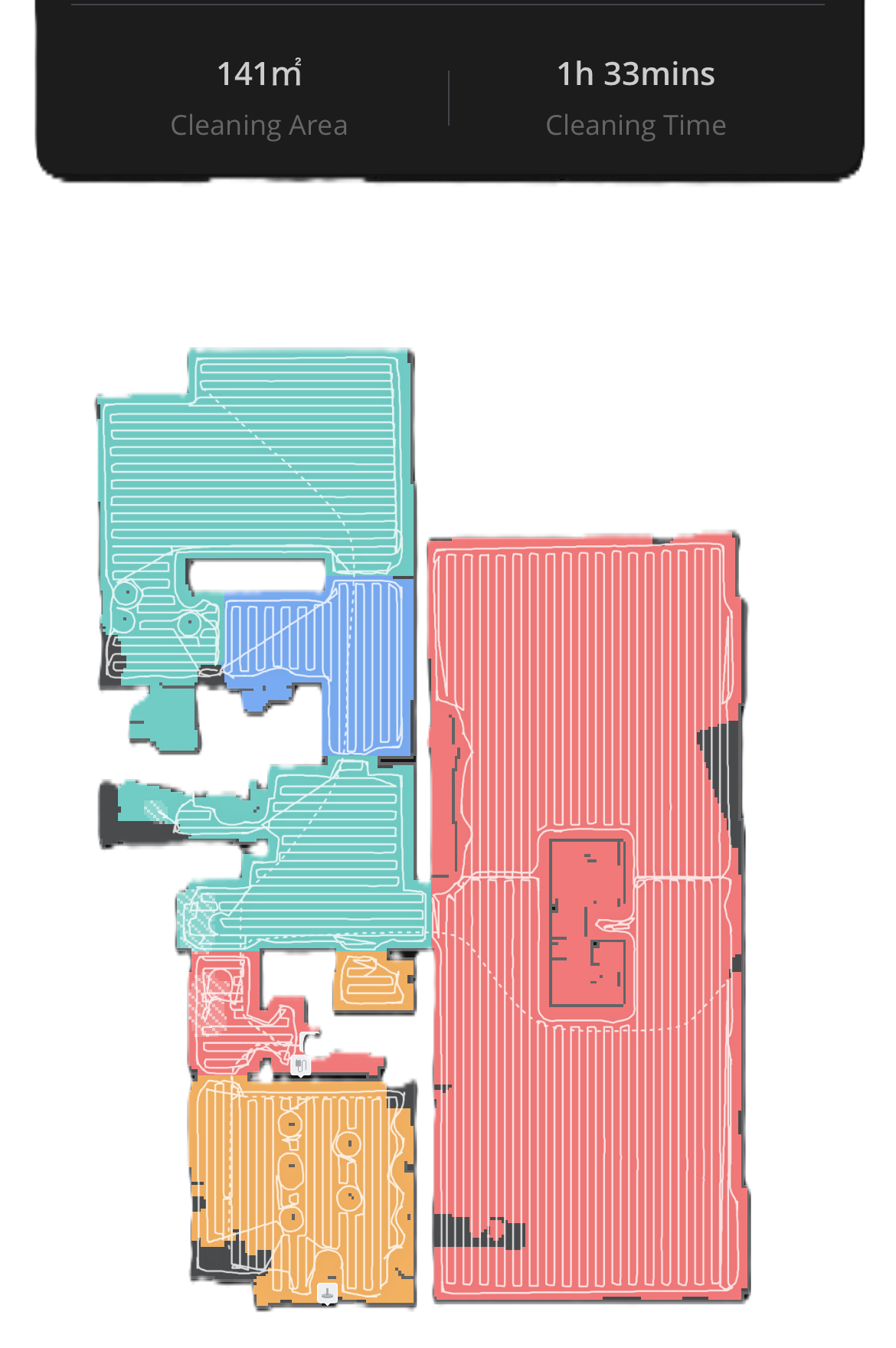
3.2 Assessment (Quickscan) Practical approach in 5 steps
- Go out and see (Gemba walk). Walk the route from raw material to end product. Write down where to wait, search, repack and move.
- Make the routing visible (spaghetti diagram). Draw the real walking lines of material, semi-finished products and people. Not the ‘official’ route, but what is happening today. Doubts? Multi-Snapshot, repeat your routing. There is no such thing as coincidence!
- Measure WIP and waiting time (small but hard). Count intermediate stocks at the hotspots and link them to a reason (mismatch, batching, missing parts, planning, quality).
- Stabilize the base (5S+ standards). Remove obstacles, unambiguate locations, standardize replenishment and handling. Goal: fewer exceptions, less improvisation.
- Set rhythm and ownership (multi-tier routine). Make deviations visible (leading + execution indicators) and discuss them at a fixed rhythm. A deviation always leads to action: cause → measure → effect measurement.
3.3 From quick scan to business case
A business case becomes strong if it shows which obstacles are ‘fixed’ and which can be solved with reclassification, standards and limited investments. Link improvements to measurable effects: lead time, service, safety, quality and cost per handling/transport. Important: Don’t automate to speed up a bad system. Optimize routing, standards and control first; Only then choose robotization or mechanization when the flow is stable.
4. Key takeaways – Layout & Routing
- – Layout and routing are system design: they structurally determine movement, WIP, lead time and risk.
- – Start light: Gemba + spaghetti diagram + minimum measurements quickly give facts and focus.
- – Distinguish between fixed and flexible assets; The biggest quick gain is often in the flexible layer.
- – Stabilize with 5S and standards first; Only then add automation.
- – Guarantee with rhythm and ownership: measure → decisions → implement → measure effect.

Food4TheBrain (2026)
Operational Excellence, Building process clarity today for the value chain of tomorrow | Assessement Systems | Coaching & Training
info@act2vision.nl | +31 (0) 686 698 026 | Amsterdam, Netherlands, EEA
- Artikel series: Operational Excellence (3/5)
- Blog series: Supply Chain Digital Twins
- Blog series: Carbon Capture and Storage